Enter password to view this project
Case study available only on
desktop view
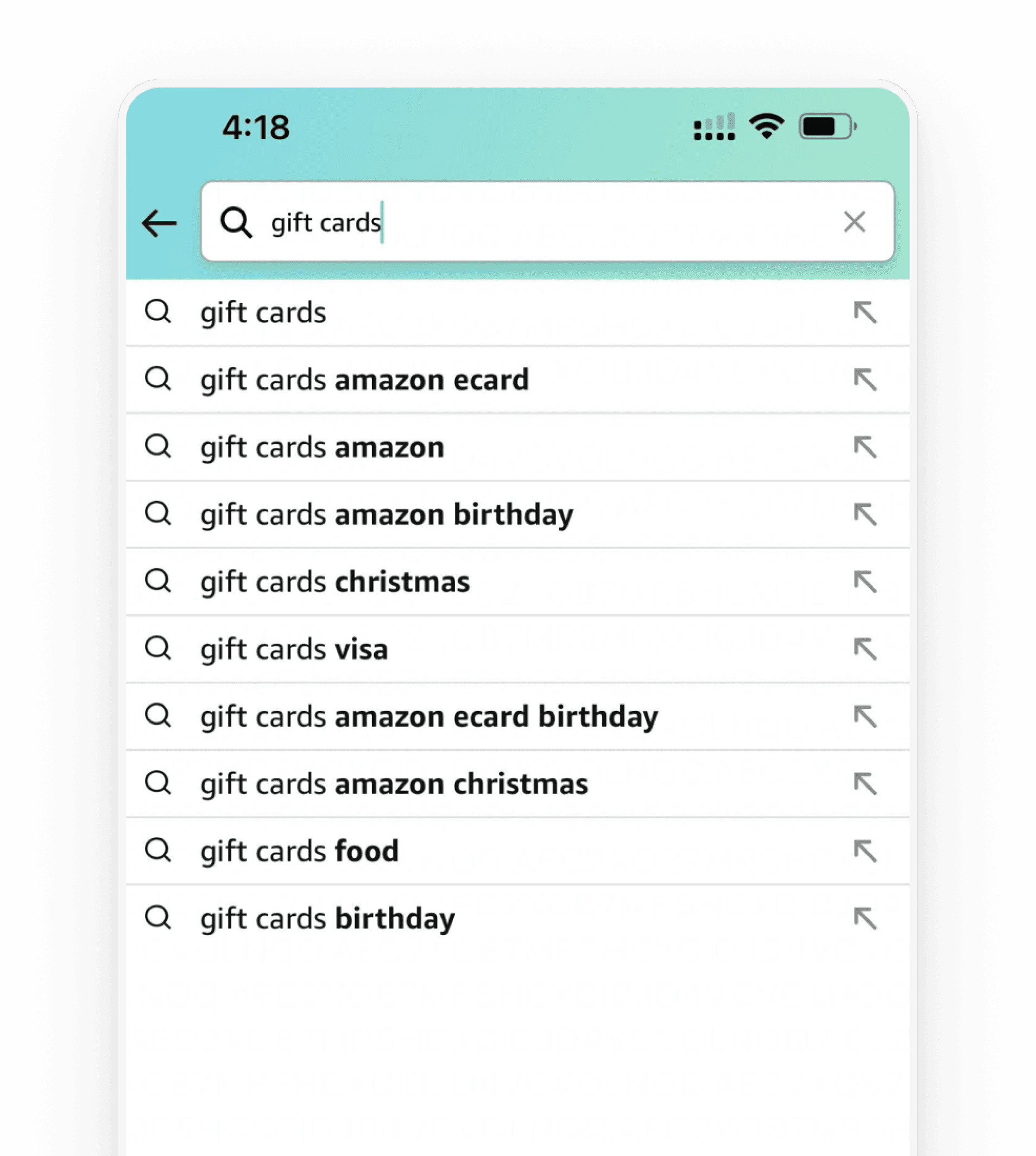
Gift Card Search & Discoverability
Role
UX Designer, Researcher
Team
1 Product designer,
1 Research,
1 TPM,
2 Marketing
Tools
Figjam, Figma, Quip
Timeline
4 months
Project overview
Despite Amazon offering a wide range of Gift Cards, a recent global study revealed that customers face consistent friction across the journey from discovering Gift Cards as a gifting option, to locating GC products on-site, and understanding distinctions between formats like Email Gift Cards(eGC), Physical Gift Cards(pGC), and Branded Gift Cards(bGC). This project aimed at identifying usability gaps and clarity issues within the Japan online store experience, and uncover opportunities to improve Gift Cards(GC) discoverability, product understanding, and campaign engagement through design interventions. Based on the learnings, this exercise was later scaled as a global initiative for WW marketplaces.
76%
Are unaware of GC available online
45%
Prefer shopping GCs offline
31%
Engage in online shopping
Goal
How might we improve the discoverability, clarity, and engagement of Amazon Gift Cards in the Japan online store experience, so that customers can easily find, understand, and choose the right gifting option across eGC, pGC, and bGC formats?
With the proposed solutions, we will also be supporting Japan’s design strategy that targets to increase +30% glance view at DP from 15.19M to 19.747M, +6% CVR at DP from 18.11% to 19.19% and ¥532MM ($5M) issuance for pGC and eGC.
The process

Data analysis
This phase included a thorough analysis of existing data through secondary research to uncover insights into customer shopping patterns and behaviors. The process comprised three essential steps to extract relevant data:
Filter
Conducting a filtration exercise to formulate questions based on customer profiles, behaviors, pain points, and perceptions of Amazon, derived from project Matrix (Internal name for WW GC research).
Data analysis
Analyzing the filtered questions to categorize customer profiles.
Organising
Organising each data set into age brackets to align with persona characteristics.
Persona creation
I developed user personas derived from key data insights collected from project Matrix. Here’s a detailed overview of the research plan's structure.
9
Countries
3k
Respondants per marketplace
30+
Questions with
follow-ups
3
Reference points
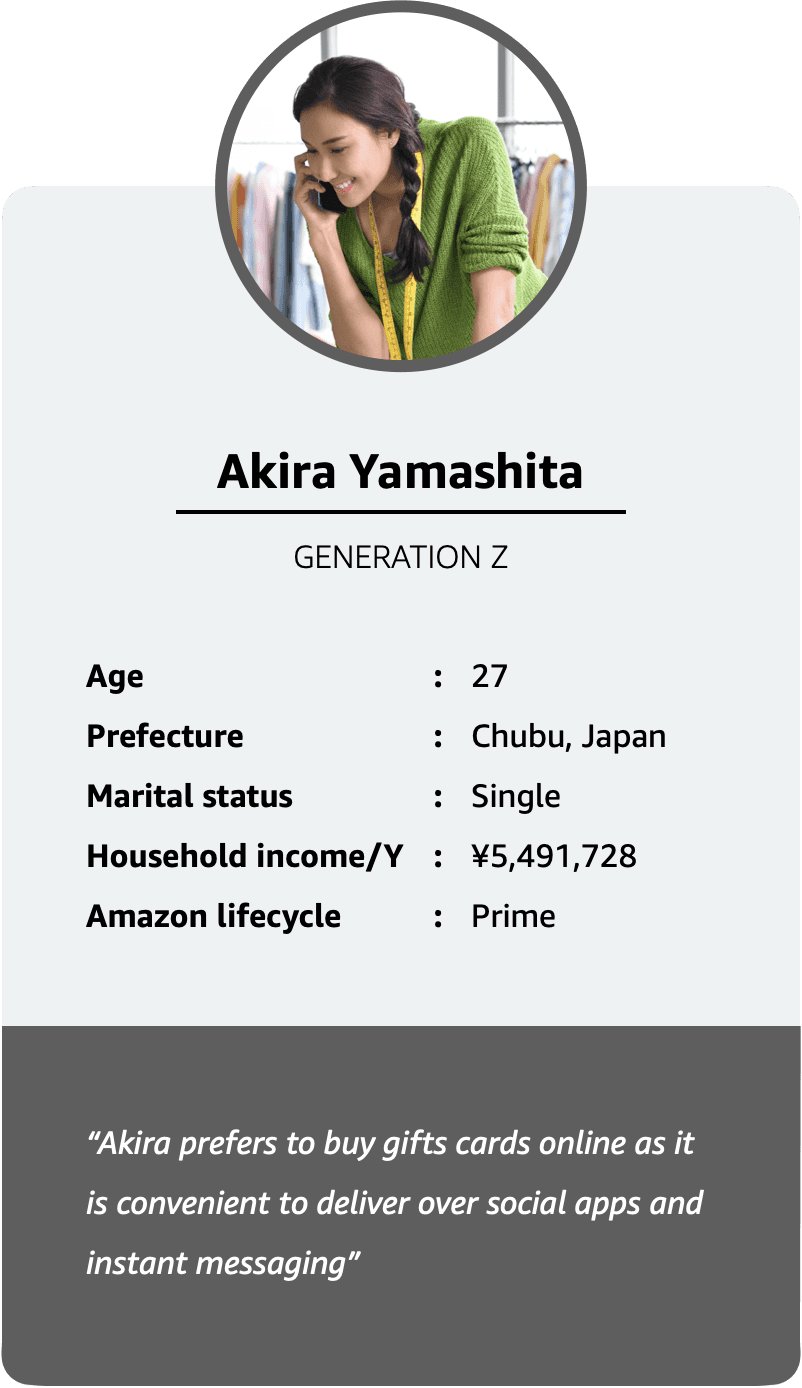
Online preferred customer
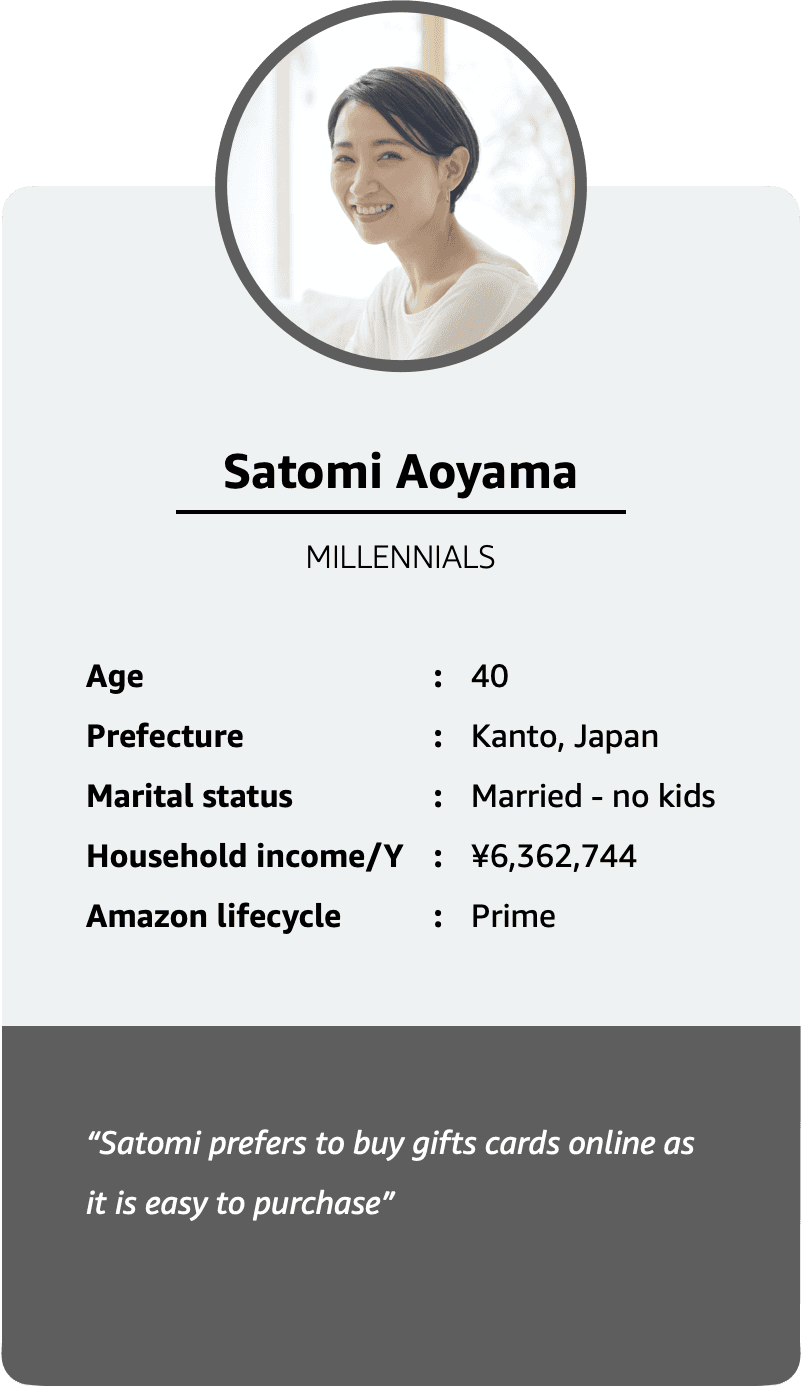
Online preferred customer
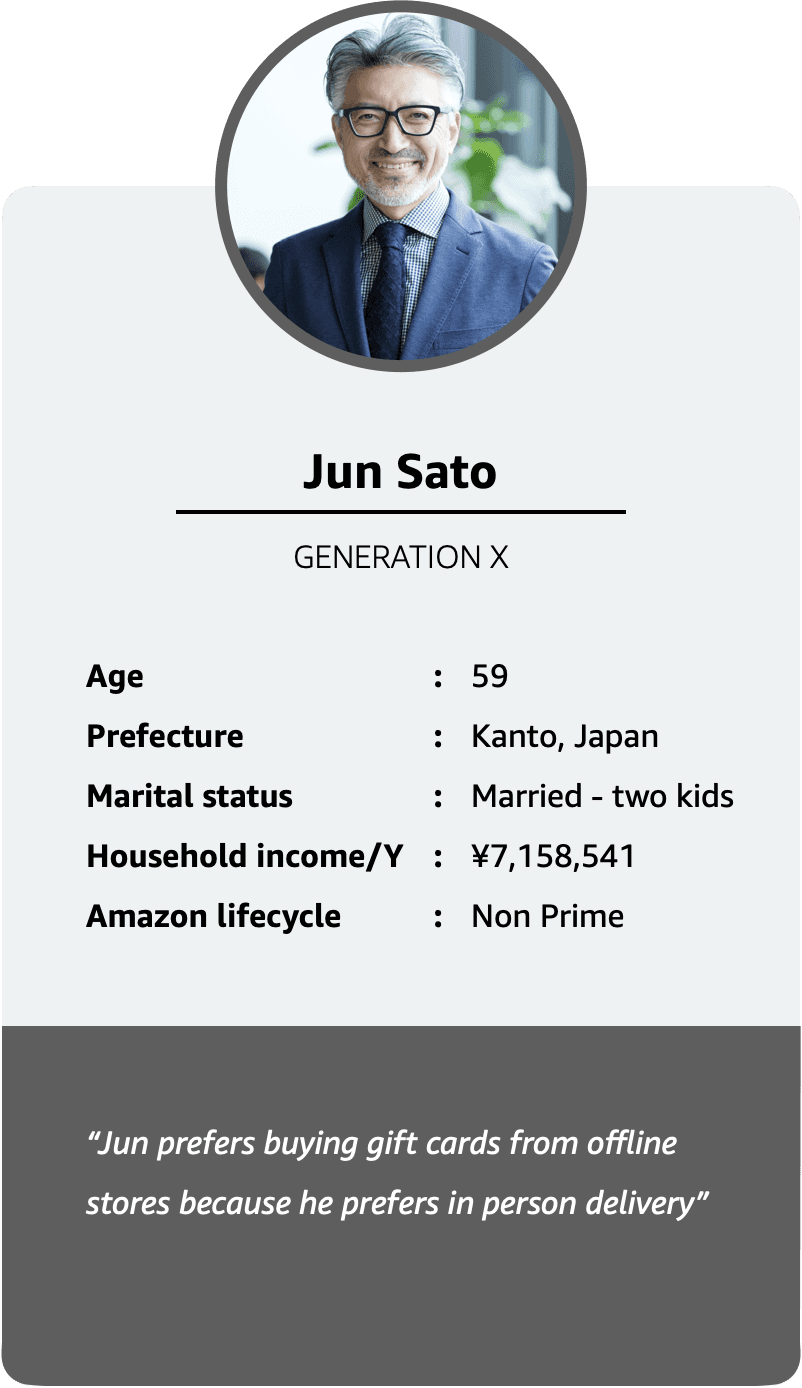
B&M preferred customer
These personas grounded our understanding of customer journeys and ensured design decisions reflected real user needs. This foundational work not only helped me grasp the essentials but also served as a crucial reference point for all design efforts moving forward as a team. Additionally, I developed tailored personas for various marketplaces, each reflecting the unique preferences and data points of their respective customers.
Customer journeys structure
In this exercise, I meticulously mapped and tested 12 distinct customer journeys. These journeys encompassed all three identified personas across both desktop and mobile platforms, considering the experiences of both signed-in and guest users. Below, you'll find a detailed outline of the structure of our journey map.

The highlighted sections in the cells above showcase crucial insights as we explore the user journey. Our focus will be on the experience of User 1, Akira Yamashita, detailing a comprehensive discoverability journey.
Discoverability
Discoverability refers to users encountering relevant content organically - content they weren’t actively seeking but find useful when surfaced intuitively.
Search-ability
Search-ability is when a customer knows what they want and chooses to search for the product. It begins when a customer starts looking for something and it ends when they’ve found what they’re looking for.

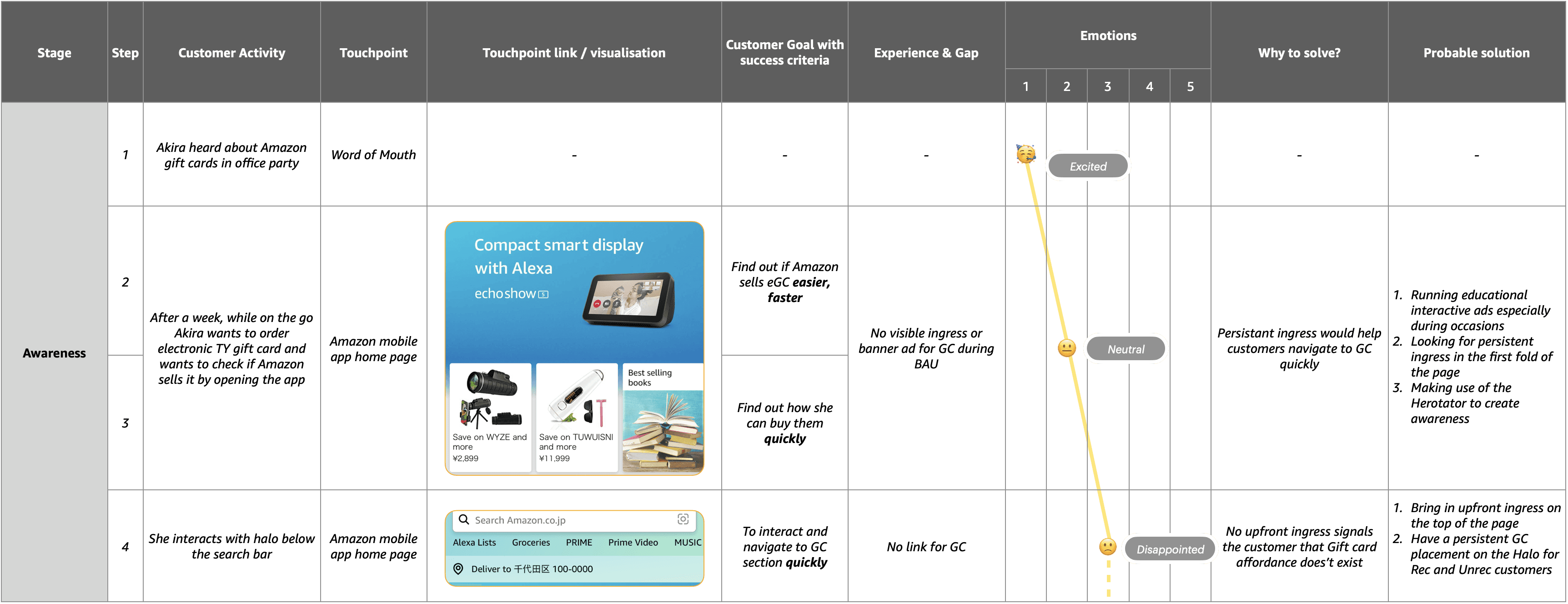
Akira Yamashita (GenZ)
Scenario: Akira hears about Amazon gift card and wants to buy “Thank you Gift Card” for her colleague.
Expectation: To find “Thank you Gift Card”
Discoverability
Journey
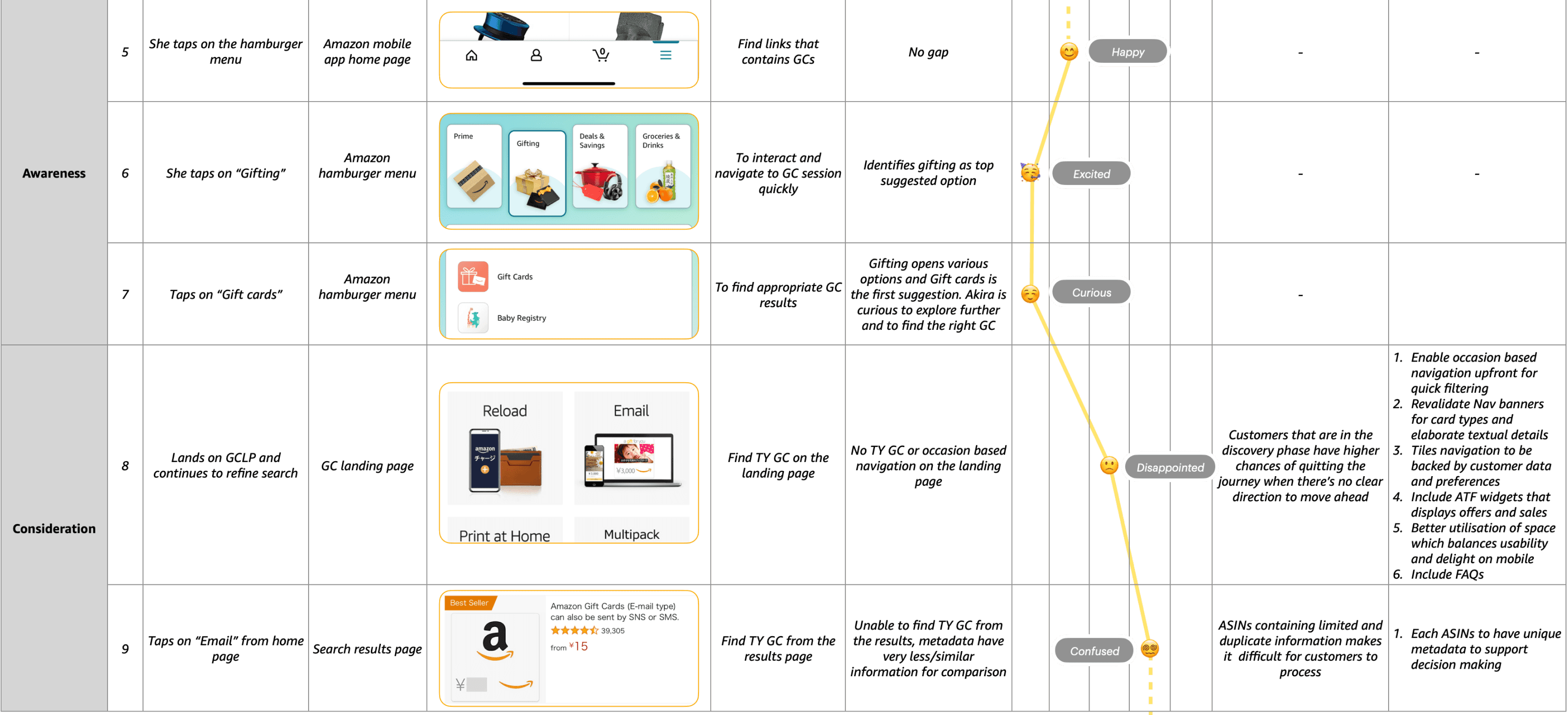
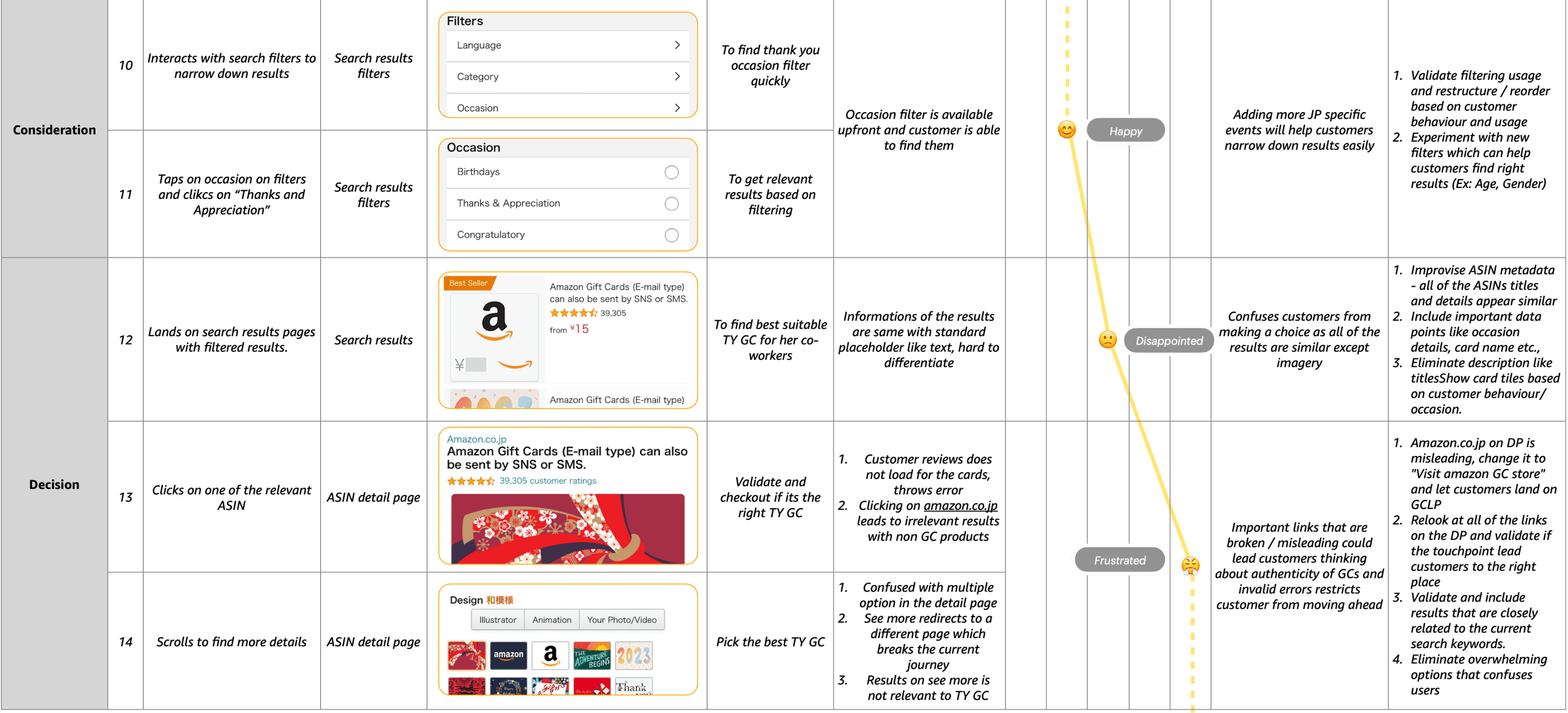
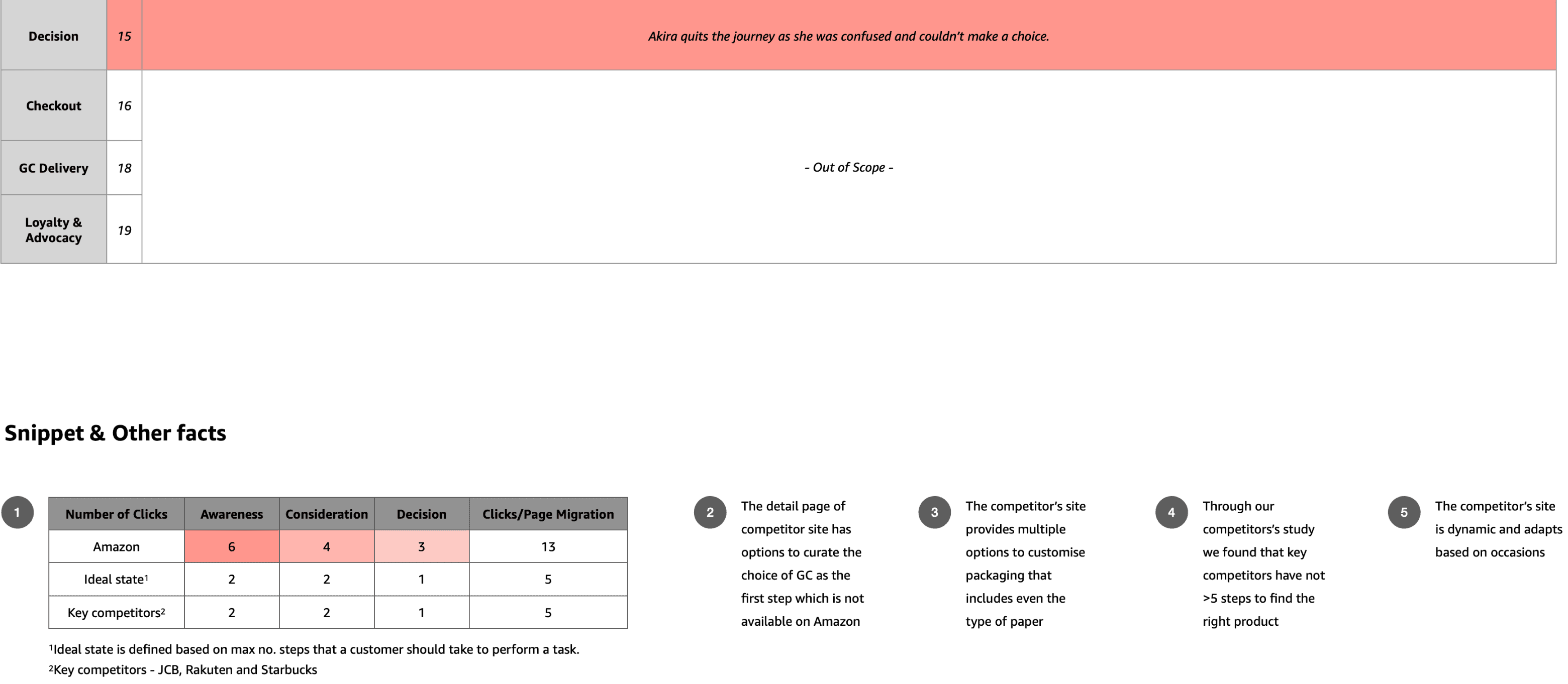
40+ probable solutions
This exercise provided valuable insights into the customer pain points encountered at each stage of their journey, leading to over 40 potential solutions.
Key snippets
Our competitor benchmarking revealed a key UX gap: while Amazon required 13 clicks to reach the purchase decision point, competitors streamlined this to just 5 - highlighting significant room to reduce friction and improve conversion.
Other facts
Competitors also offers a range of curation options, allowing users to personalize their packaging. Their website is dynamic, adapting seamlessly to different occasions.
Process of ranking priorities
Mapping the customer journey revealed over 40 potential interventions to enhance the experience. However, it was crucial to prioritize these initiatives to ensure they received the necessary focus, given our limited resources and business objectives. To address this, I used a 3x3 matrix that evaluated two key factors: Experience Impact and Technical Effort, while also integrating the Heuristics principles from the Nielsen Norman Group supporting the experience impact from design. Technical effort was ranked by the TPM, who helped evaluate the tech effort for each identified solution.
41 Probable solutions identified from all the journeys
Search
26 interventions
Home page
5 interventions
GC landing page
7 interventions
Detail page
3 interventions
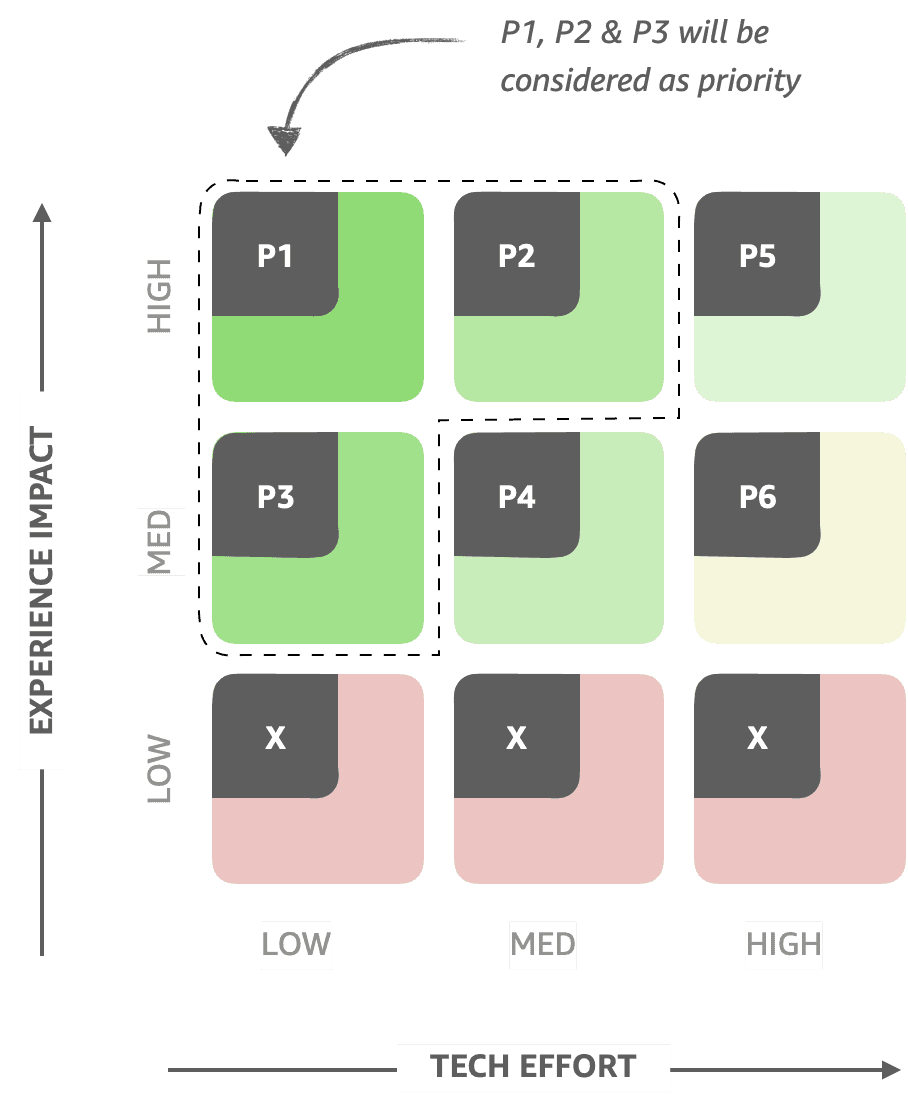
Two parameters which are used to map the matrix here
Experience impact of the solution
Tech effort related to the solution
Ranking rationale
Ranking of “Experience Impact” is given as per list of 10 heuristics provided by “Nielsen Norman Group”. More Usability Heuristics a probable solution solves, higher the rank.
Ranking of “Tech effort” is based on implementation effort.
To bring simplicity in plotting data I used “Experience Impact” and “Tech Effort” as decision making tangents. Projects from each quadrant can be further evaluated on the basis of (This will help in planning projects better):
It’s business impact
Other team effort ranking
There could be a possibility of a design solution being bi-furcated into multiple solutions based on the complexity of problem.
Further Prioritisation Using Traffic Data
The 3x3 matrix was instrumental in identifying P1, P2, and P3, but each category contained several interventions that required further logical prioritization. To tackle this, I conducted a thorough analysis of the incoming traffic data and page hits. By examining the traffic patterns for each page, I was able to recommend a prioritized selection of interventions within each category, ensuring that the most impactful changes were implemented first.

As per chronology, the design initiatives will be:
Detail page
GCLP
Search pages
Other priorities based on experience impact
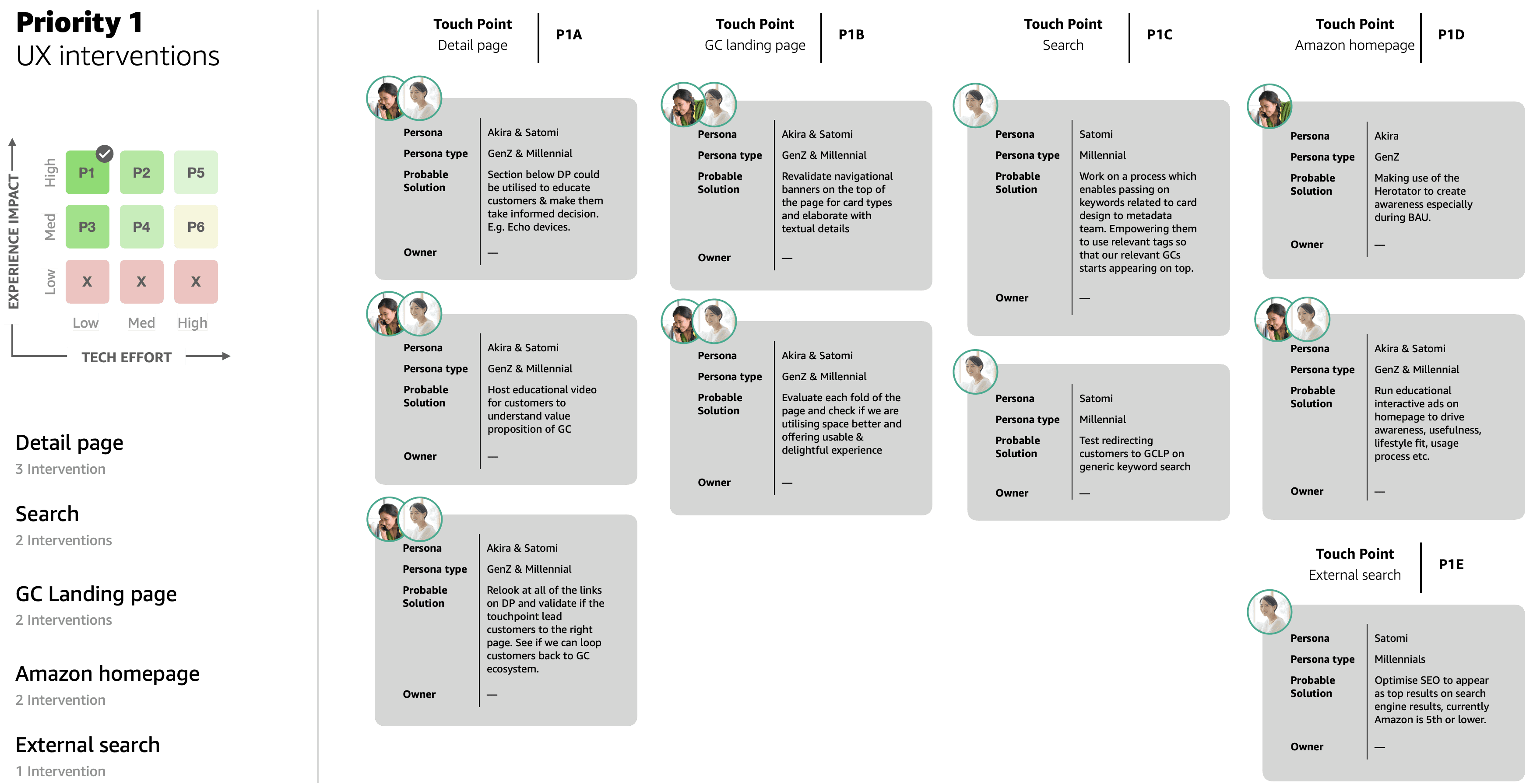
Priority list based on ranking
The finalized list of UX interventions after ranking includes a detailed categorization of priorities. Each item is filtered into groups such as P1A, P1B, P1C, and so on, based on the incoming traffic data points.
Previous
Next
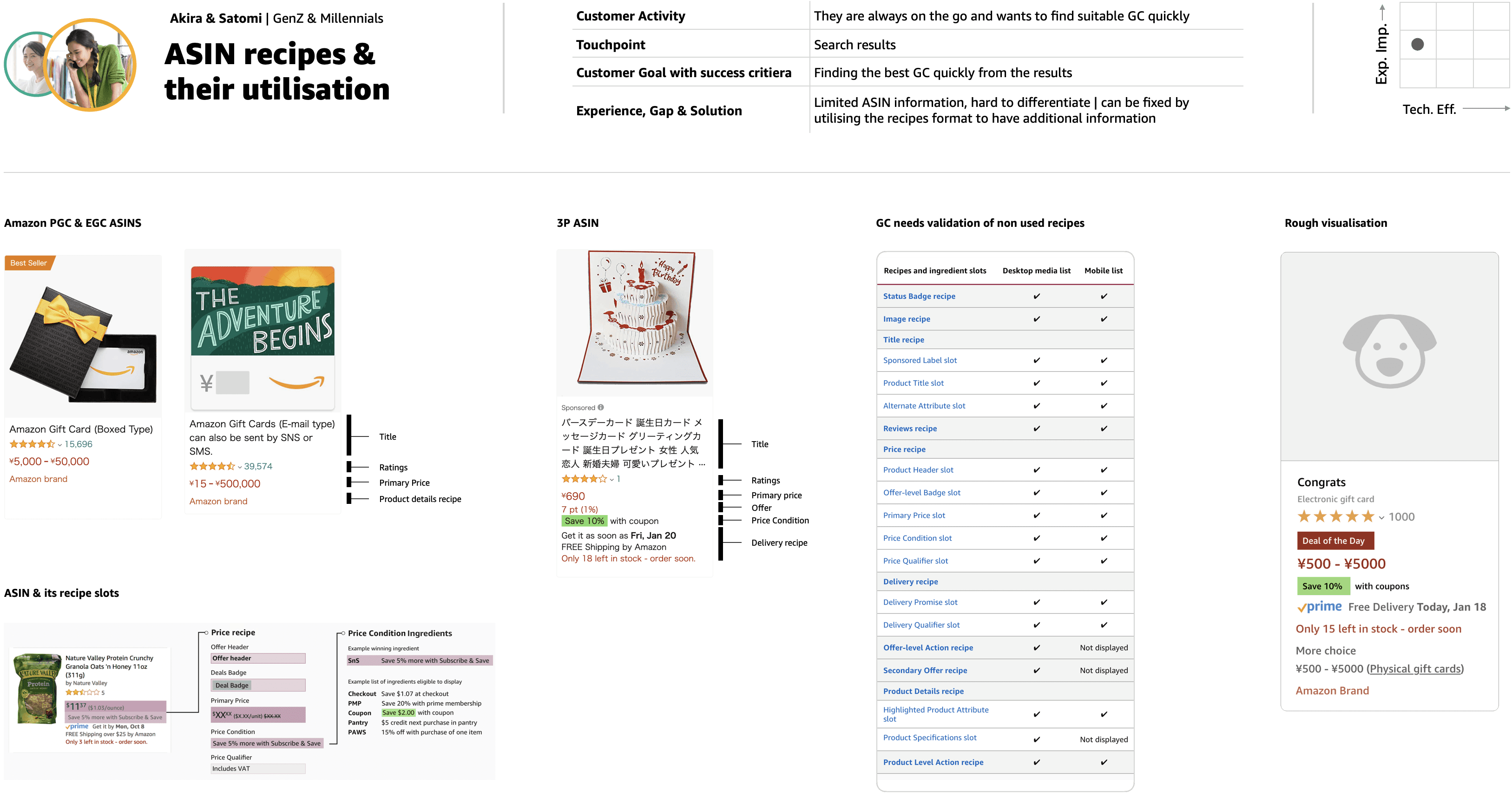
Early Visual Explorations and recommendations
Next, I developed visual examples to illustrate how the proposed solutions address each identified pain point. This approach not only enhances the clarity of our strategy but also provides a clearer direction based on the findings.
Previous
Next
Key experiments & Outcomes
The interventions outlined above were designated as the primary focus initiatives for Gift Cards in 2024. A pod methodology with design, product, marketing and tech involved to initiate these as individual projects to improve CX. Each intervention was scaled up to individual initiatives with product, marketing and tech involvement to drive improvements. Here are two key initiatives that I spearheaded and delivered results on:
(1) Revamping the Gift Card Landing Page (GCLP) and
(2) Enhancing the usability of the Detail Page based on user insights.
While each initiative has since evolved into its own dedicated project, here’s a high-level snapshot of two key experiments I led and their impact. Each experiment will be documented in its own case study for a more detailed explanation.
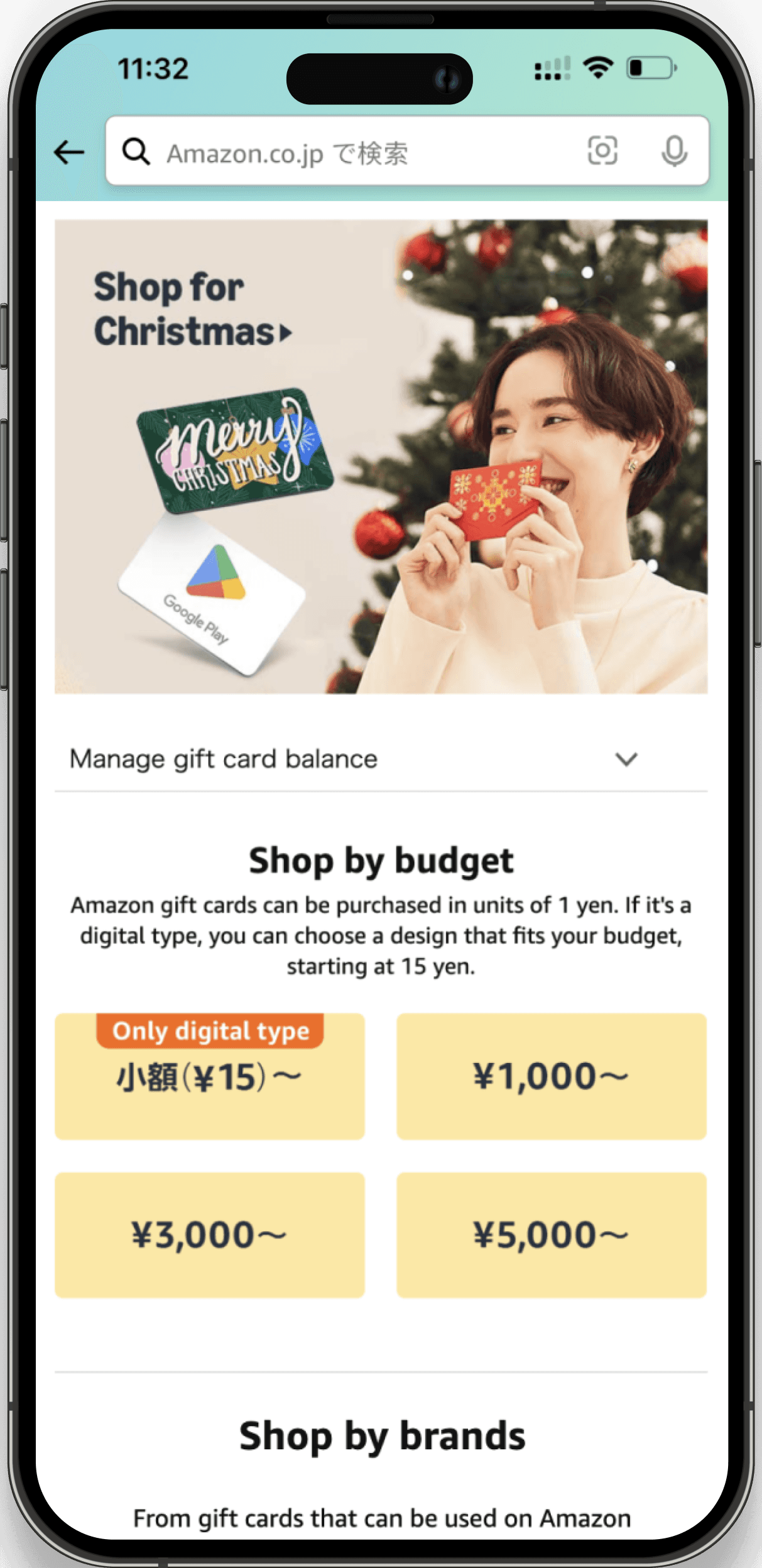
Gift Card Landing page revamp
An extensive exercise to revamp the entire structure backed by data points gathered from customers clubbed with business needs resulted in In Japan, the redesigned landing page drove a 4x increase in issuance (¥8.81M) and 3x higher CTR (13.46%) over control in web lab tests—validating the effectiveness of the proposed UX improvements.
Case study → (Coming soon)
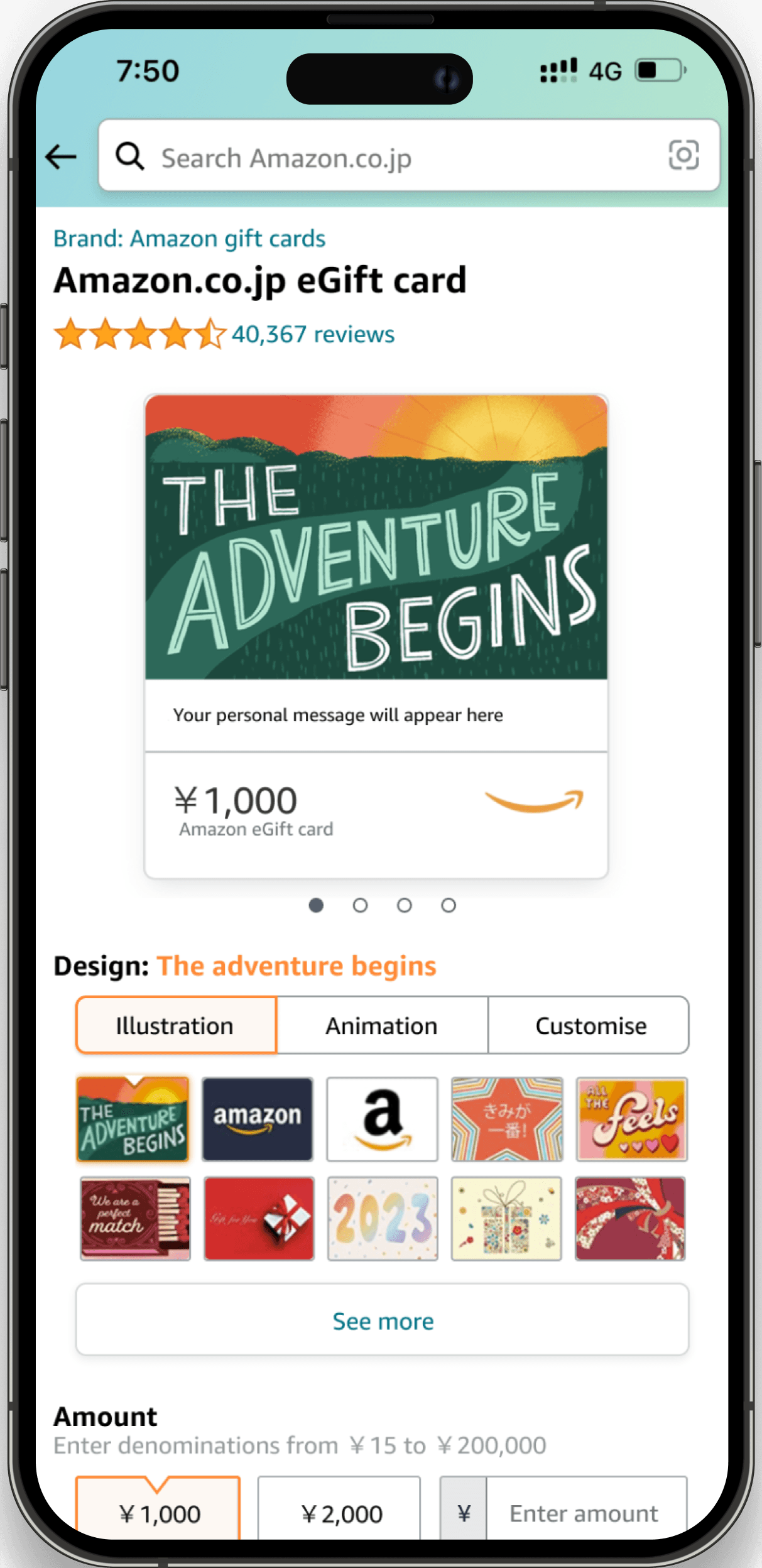
Enhancing the usability of Gift Card detail pages
Conducting a thorough usability analysis of the Gift Card detail page revealed key customer pain points through a variety of UX methodologies, including VIMM model analysis, expert reviews, and exploratory research. The insights gained from these activities were instrumental in redesigning the Detail page for all types of gift cards, including e-mail, physical, and branded options.
Case study → (Coming soon)
Case study available only on
desktop view